


Cookies Privacy
I accept Cookies Policy We use cookies to understand how you use our website and to improve your experience. By continuing to use this website, you accept our Link is copied!

Source-Code and Secure-Design Review

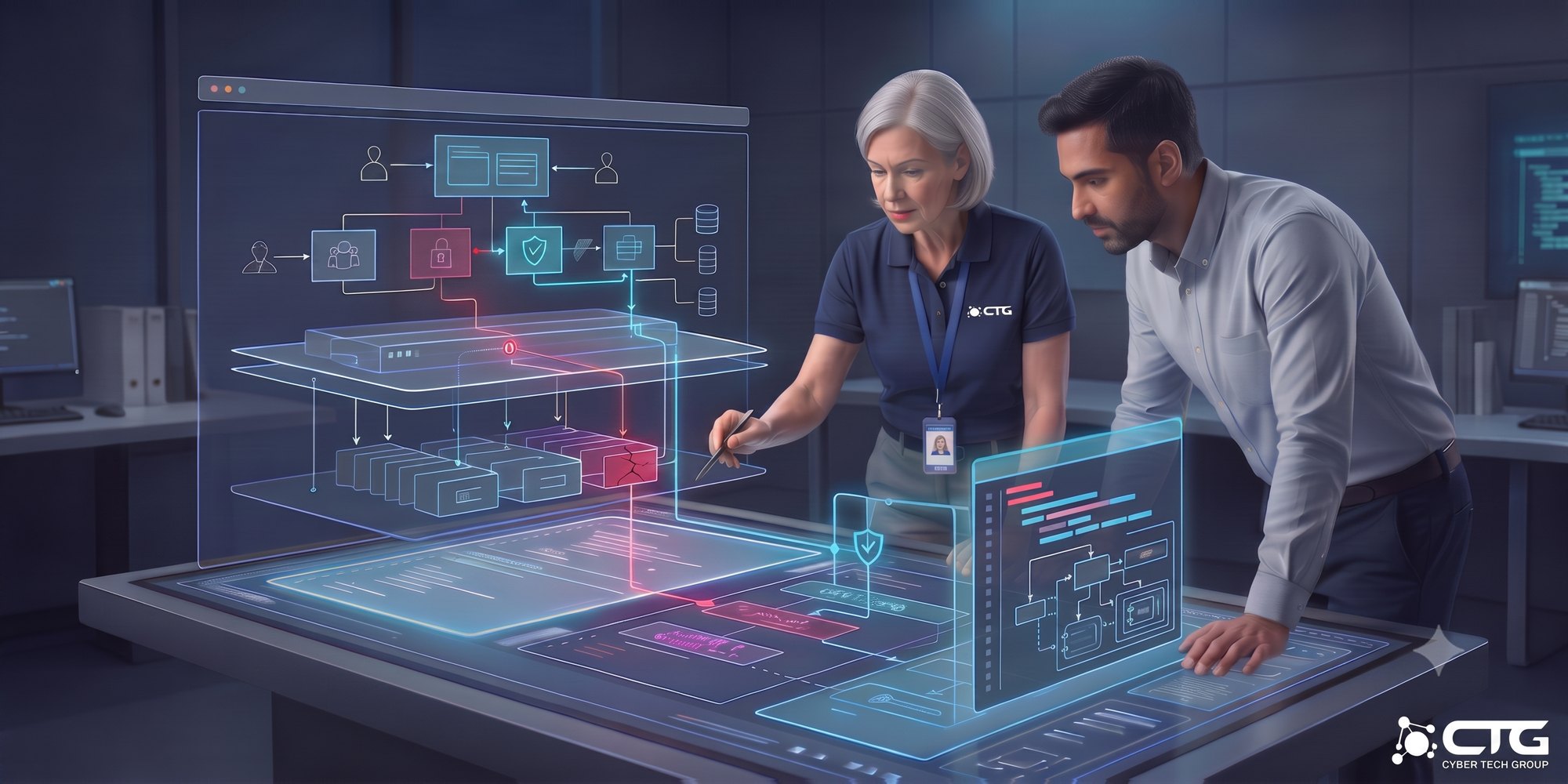
Source-code and secure-design review examines whether architecture and implementation decisions introduce vulnerabilities before they become costly production incidents. The service is intended for software teams that need expert analysis of high-risk code, security-critical components or new designs beyond standard automated scanning.

Outcomes this service supports

The purpose is to validate realistic attack paths safely and convert technical weaknesses into remediation priorities.

  • Identify architectural weaknesses and insecure trust assumptions early.
  • Find code-level flaws that require contextual human review.
  • Validate authentication, authorisation, data handling and cryptographic decisions.
  • Improve developer understanding of root causes and secure patterns.
  • Create actionable remediation before release or major change.

What CTG cover and produce?

We agree the precise scope up front. Depending on the objective, environment and authorised access, the engagement may cover:

  • Security architecture, trust boundaries and data flows.
  • Threat modelling and abuse cases.
  • Authentication, authorisation and session logic.
  • Input handling, business logic and error behaviour.
  • Cryptography, secrets and sensitive-data handling.
  • Dependency and framework use in context.
  • Security-critical source-code components.
  • Secure-design patterns and compensating controls.

How delivery is structured?

Select the architecture, repositories, components, languages and risk questions in scope.

1. Define review objectives:

Map data flows, identities, entry points and abuse cases.

2. Model threats and trust:

Inspect high-risk code paths and use targeted tools where they add coverage.

3. Perform expert review:

Confirm context, exploitability, intended behaviour and feasible fixes.

4. Validate findings with developers:

Provide remediation guidance, secure patterns and review conclusions to the engineering team.

5. Transfer knowledge:

What you receive?

Outputs are prepared for executives and for the technical teams doing the remediation. Depending on scope, they may include:

  • Threat model and trust-boundary diagrams.
  • Architecture-security observations.
  • Source-code findings with file and function references.
  • Root-cause and exploitability explanation.
  • Secure-design and coding recommendations.
  • Prioritised remediation plan.
  • Developer workshop and optional follow-up review.

How we keep the work controlled?

Testing is governed by written authorisation, explicit exclusions, safety limits and emergency contacts. Material findings are manually validated, supported with reproducible evidence and explained in terms of realistic impact rather than scanner severity alone.

Typical triggers for this work

  • A high-impact application is being designed or redesigned.
  • Security-critical code has not received independent review.
  • Automated tools produce large volumes of low-context findings.
  • Authentication, cryptography or data isolation is complex.
  • A serious application incident revealed design weaknesses.
  • The organisation wants to embed review checkpoints in the SDLC.

Frameworks, scheduling and scope limits

The engagement may draw on OWASP ASVS, OWASP Software Assurance Maturity Model, SEI CERT guidance where relevant, language and framework-specific secure coding guidance. Where we cite a standard, it explains our method only — it is not a certification, accreditation or official determination.


We confirm the timeline at scoping; it reflects the environment's complexity, the evidence on hand and access to the right people.


The review covers the supplied architecture and code at a point in time. It does not replace secure development ownership, comprehensive testing of the running application or continuous dependency management unless separately included.

Discuss Source-Code and Secure-Design Review with CTG. In a focused scoping call we agree the objective, scope, evidence, delivery model and outputs, then send a proposal.

Related services

Frequently asked questions

What does Source-Code and Secure-Design Review cover?

We agree the precise scope up front. Typical areas include security architecture, trust boundaries and data flows, Threat modelling and abuse cases, Authentication, authorisation and session logic, and Input handling, business logic and error behaviour. The proposal documents what is out of scope, what access we need, what you provide and how success is judged.

What will we receive at the end of the engagement?

Deliverables depend on the agreed objective and may include threat model and trust-boundary diagrams, Architecture-security observations, Source-code findings with file and function references, and Root-cause and exploitability explanation. We connect each key conclusion to its evidence, its impact, its priority and an accountable action.

Could testing disrupt production systems?

Authorised testing can create risk if it is poorly controlled. CTG agrees testing windows, prohibited techniques, stop conditions and emergency contacts before work begins, and uses higher-risk techniques only with explicit approval.

Is remediation retesting included?

Retesting can be included in the initial scope or ordered after remediation. It validates the previously confirmed findings and closely related bypass conditions; it is not automatically a complete new assessment.

How long does the engagement take?

We confirm the timeline at scoping; it reflects the environment's complexity, the evidence on hand and access to the right people.

How does this relate to Secure Software-Development Lifecycle?

They address adjacent but separate needs. Scoping identifies whether Source-Code and Secure-Design Review, Secure Software-Development Lifecycle, or a coordinated programme is the smallest useful approach without duplicating work.

What are the principal limitations?

The review covers the supplied architecture and code at a point in time. It does not replace secure development ownership, comprehensive testing of the running application or continuous dependency management unless separately included.